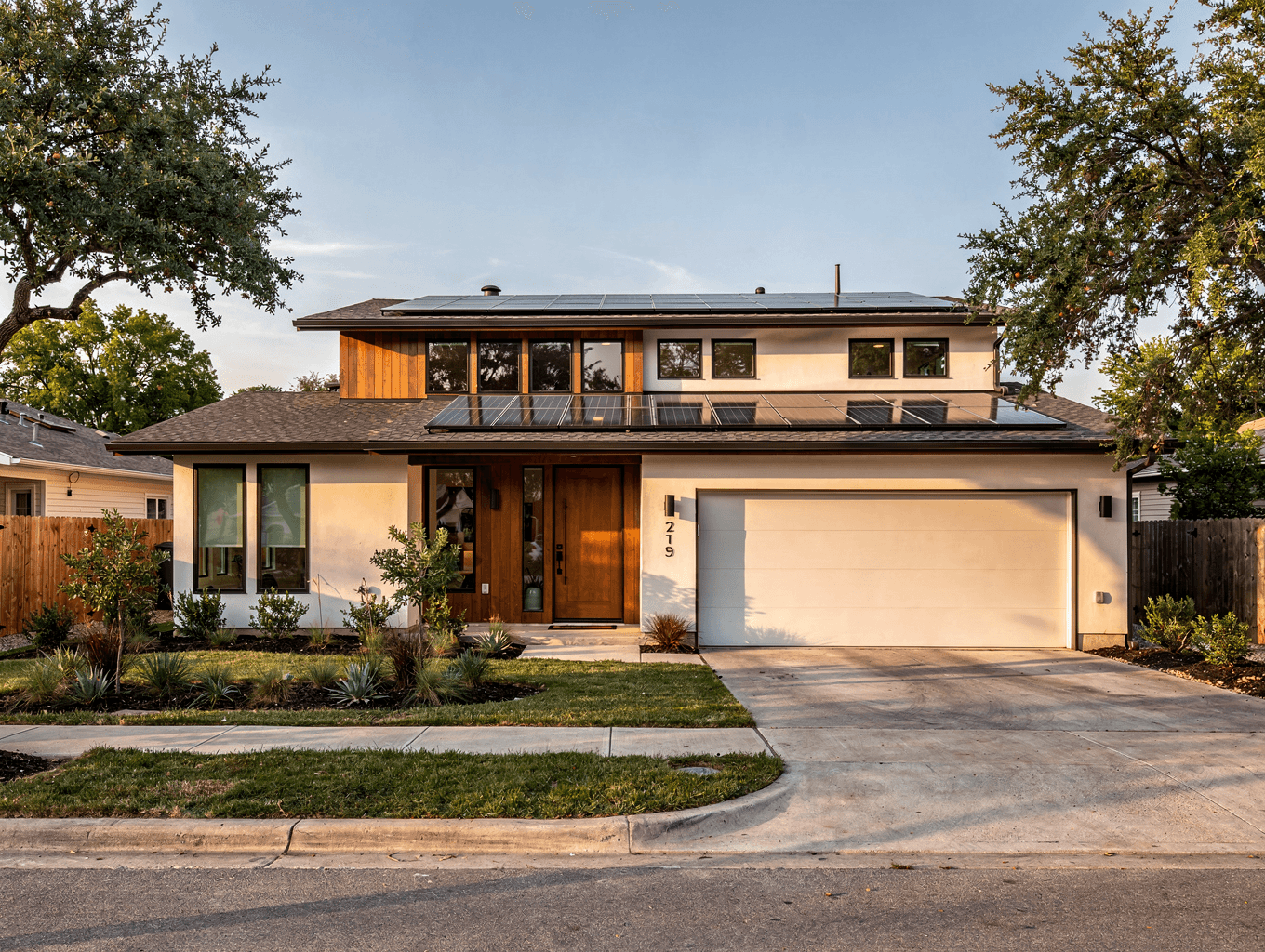
The real answer is not a national average and it is not the monthly payment on a postcard. It is the installed price, expected production, export value, financing structure, and how the federal credit is being treated in the numbers. All of those things vary by project.

Guide 02
What homeowners should actually expect solar to cost
Snapshot
Focus
Project economics
Reading time
12 min
Decision point
Price, structure, and payback
Reading quotes honestly
The cleanest comparison is cost, production, and total paid over time.
Most homeowners get pushed to compare proposals on the wrong variable. One quote leads with a low monthly payment, another highlights the tax-credit-adjusted cost, and a third looks cheaper because the production assumptions are weaker or the equipment plan is thinner.
The useful comparison strips all of that down to a few numbers: installed price before incentives, expected annual production in kWh, how exported power is valued, financing terms and total paid over the life of the loan, and break-even timing under assumptions you can actually verify. In the Austin market, installed cost for a typical residential system currently ranges from roughly $2.50 to $3.50 per watt before the federal credit, depending on equipment, installer, and project complexity. A 8 kW system at $3.00 per watt is $24,000 before the federal credit — which at 30 percent brings the effective cost to roughly $16,800.
But that number only means something when paired with the production estimate, the utility rate, and the export-credit structure. A system that produces 12,000 kWh per year in a utility territory where exports are credited at full retail rate has a very different payback profile than the same system in a territory that credits exports at avoided cost — which can be 40 to 60 percent less. These details are not fine print. They are the difference between a 7-year payback and a 12-year payback.
The useful comparison strips all of that down to a few numbers: installed price before incentives, expected annual production in kWh, how exported power is valued, financing terms and total paid over the life of the loan, and break-even timing under assumptions you can actually verify. In the Austin market, installed cost for a typical residential system currently ranges from roughly $2.50 to $3.50 per watt before the federal credit, depending on equipment, installer, and project complexity. A 8 kW system at $3.00 per watt is $24,000 before the federal credit — which at 30 percent brings the effective cost to roughly $16,800.
But that number only means something when paired with the production estimate, the utility rate, and the export-credit structure. A system that produces 12,000 kWh per year in a utility territory where exports are credited at full retail rate has a very different payback profile than the same system in a territory that credits exports at avoided cost — which can be 40 to 60 percent less. These details are not fine print. They are the difference between a 7-year payback and a 12-year payback.
The variables that actually move payback
Installed price per watt
This is the starting comparison point. In central Texas, expect $2.50 to $3.50 per watt for a quality installation with tier-one equipment. Anything significantly below that range deserves scrutiny — it may reflect thinner equipment, subcontracted labor, or optimistic plan assumptions. Anything above it should come with a clear explanation of what additional value justifies the premium.
This credit reduces your federal tax liability — it is not a check from the government and it is not a discount at signing. If your federal tax liability in the year of installation is less than the credit amount, the remainder rolls forward to future tax years. Make sure your quote explains this clearly.
Utility export value
If exported power is credited below retail rate, oversizing a system becomes much harder to justify. Austin Energy currently offers a Value of Solar rate for exported generation that differs from the retail rate. Other Texas utilities handle it differently. This single variable changes system sizing strategy more than almost any other factor in the proposal.
Financing structure and dealer fees
Dealer fees — sometimes called origination fees or channel fees — can add 15 to 30 percent to the financed amount on some solar loans, even though the monthly payment looks similar to a loan without them. A $24,000 system financed with a 25 percent dealer fee actually becomes a $30,000 loan. That difference gets buried in the term and rate, but it is real money that extends the payback timeline significantly.
Your actual usage profile
A home that uses 1,500 kWh per month with heavy daytime AC load captures more direct value from solar than a 900 kWh home that runs most of its power after sunset. Usage pattern — not just total usage — determines how much of the solar production you consume directly versus how much gets exported at a potentially lower credit rate.
Upcoming roof or electrical work
If the home needs a roof replacement within the next five years or a panel upgrade to support the solar system, that plan should be part of the real project cost. Installing solar on a roof that needs replacement soon means paying for a detach-and-reset later — typically $2,000 to $5,000 depending on system size — plus the cost and hassle of coordinating two separate projects.
Payback timeline
When solar pays for itself in Austin
8 kW system — cash purchase over 20 years
How to pressure-test a solar savings estimate
1
Ask for annual production in writing
If the savings story depends on production numbers, the quote should state them clearly — first-year projected kWh, not just system wattage. Ask what shade and orientation assumptions were used and whether the estimate comes from a site-specific modeling tool like Aurora or Helioscope, or a generic lookup table.
2
Check whether export value equals retail rate
If the proposal quietly assumes exported solar is worth full retail rate and your utility does not offer that, the payback estimate is inflated. Ask the installer to show you the specific export credit value they used in the model and verify it against your utility's current published rate.
3
Separate system price from financing effect
Request the cash price and the financed total-cost-over-time side by side. If the financed version is 20 to 30 percent more expensive than the cash price for the same equipment, dealer fees are likely embedded. A good installer will show you this comparison without being asked.
4
Ask what utility rate escalation is assumed
Some payback estimates assume electricity rates will increase 3 to 5 percent per year. Over a 25-year system life, that compounds dramatically. Ask what rate escalation assumption drives the savings number, and recalculate with a more conservative figure — even 2 percent per year — to see how sensitive the payback is to that assumption.
5
Look at the 10-year and 20-year total cost picture
A fast-sounding payback in year 7 does not matter much if financing cost pushes total paid well above the cash price. Map out the cumulative cost and cumulative savings at year 10, year 15, and year 20 to see the full economic picture rather than just a single break-even number.
Cost questions that belong on every quote comparison
Talk with our team
Tell us what is happening with your home, and we will help you choose the right next step.